
8 Weeks Pregnant is one of the final weeks of the embryo stage, and your baby is growing quickly even though you may still not look pregnant yet.
8 Weeks Pregnant: Symptoms, Baby Development, and What to Expect
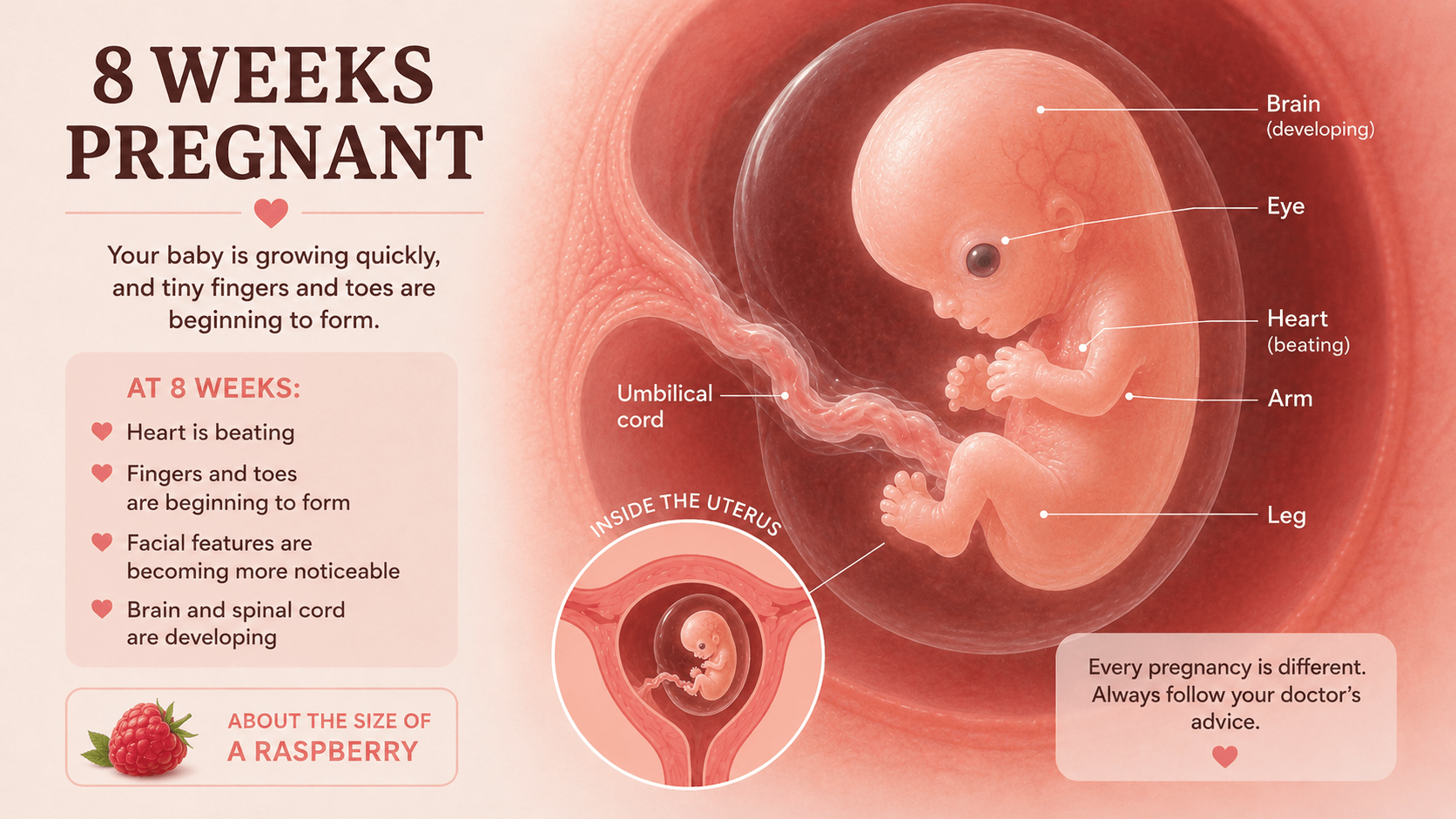
At 8 Weeks Pregnant, your baby’s fingers and toes are beginning to form, facial features are becoming more noticeable, and early pregnancy symptoms may be at full strength.
What Does 8 Weeks Pregnant Mean?
8 Weeks Pregnant means you are eight weeks into the pregnancy timeline, counted from the first day of your last menstrual period. By now, many women have already had a positive pregnancy test and may be waiting for their first prenatal visit or early ultrasound.
At 8 Weeks Pregnant, your baby is still in early development. ACOG explains that for the first 8 weeks after fertilization, the developing baby is called an embryo, and from 9 weeks after fertilization until birth, it is called a fetus. ACOG
This week can feel intense because symptoms may be strong. Nausea, smell sensitivity, breast soreness, fatigue, mood changes, and food aversions can all make normal days feel harder.
Even though you may not have a visible bump yet, your body is doing a lot. Hormones are high, the uterus is changing, and the embryo is developing quickly.
How Big Is Baby at 8 Weeks Pregnant?
At 8 Weeks Pregnant, your baby is still very small. Nemours KidsHealth says baby at 8 weeks is about the size of a raspberry, a little longer than half an inch, and weighs about .04 of an ounce. Nemours KidsHealth
ACOG says that by the end of week 8, the embryo is about half an inch long. ACOG
Because baby is still tiny at 8 Weeks Pregnant, images should still show an early pregnancy stage rather than a full newborn-looking baby. The head is large compared with the body, and the arms, legs, fingers, and toes are still developing.
Simple explanation: At 8 Weeks Pregnant, baby is about the size of a raspberry or around half an inch long. Development is moving fast, but baby is still very tiny.
8 Weeks Pregnant Baby Development
At 8 Weeks Pregnant, baby development is moving quickly. ACOG notes that during weeks 1 to 8, the brain, spine, neural tube, cardiac tissue, parts of the face, inner ear, arm and leg buds, and early digestive tract are forming. ACOG
Mayo Clinic explains that at 8 weeks, the leg buds take the shape of paddles, fingers have begun to form, the future ear structures are developing, the eyes are noticeable, and the upper lip and nose have formed. Mayo Clinic
Nemours KidsHealth also notes that the body may already be starting to move and wiggle a little, although you will not feel those movements for several more weeks. Nemours KidsHealth
At 8 Weeks Pregnant, facial features are still forming. The eyes, ears, nose, lips, and mouth are developing, but they are not fully mature yet. The head is still large compared with the rest of the body.
8 Weeks Pregnant Symptoms
8 Weeks Pregnant symptoms can feel strong because hormone levels are high. Some women feel very sick and exhausted, while others feel surprisingly okay. Both experiences can happen.
The NHS lists early pregnancy symptoms at 8 weeks including a metallic taste, sore breasts, morning sickness, headaches, mood swings, new food likes and dislikes, heightened sense of smell, milky white discharge, light spotting, and cramping like period pains. NHS
You may also notice bloating, constipation, frequent urination, fatigue, emotional swings, or feeling hungry and nauseated at the same time. Morning sickness can happen morning, noon, night, or all day.
- Nausea, vomiting, or food aversions.
- Strong smell sensitivity or a metallic taste.
- Sore, tender, swollen, or sensitive breasts.
- Fatigue that feels heavier than normal tiredness.
- Mood swings, headaches, or feeling emotional.
- Frequent urination or bladder pressure.
- Bloating, constipation, or slower digestion.
- Mild cramping or light spotting for some women.
Is Cramping Normal at 8 Weeks Pregnant?
Mild cramping at 8 Weeks Pregnant can happen. Hormone changes, uterine changes, bloating, and digestion changes can all cause lower belly discomfort.
Some cramps feel like light period cramps or stretching. Mild cramping without heavy bleeding can be common, but severe pain should never be ignored.
Call your doctor right away if cramping is severe, one-sided, comes with heavy bleeding, shoulder pain, dizziness, fainting, fever, or pain that feels very different from normal cramps.
Is Spotting Normal at 8 Weeks Pregnant?
Some women have light spotting at 8 Weeks Pregnant. Light spotting does not always mean something is wrong, but bleeding during pregnancy should still be mentioned to your healthcare provider.
If spotting becomes heavy, bright red, painful, or comes with dizziness, shoulder pain, or one-sided pelvic pain, call your doctor quickly. Your provider may decide whether you need bloodwork, an ultrasound, or monitoring.
When you are unsure, it is better to call. Early pregnancy can be stressful, and your healthcare team can help you decide what is normal and what needs attention.
Can You See Baby on Ultrasound at 8 Weeks Pregnant?
At 8 Weeks Pregnant, many ultrasounds can show more detail than earlier weeks. Depending on the scan type and exact dating, a provider may see the gestational sac, yolk sac, embryo, and cardiac activity.
Dating still matters. If you ovulated later than expected, the pregnancy may measure earlier than the calendar suggests. This can make an early scan look different from what you expected.
If your doctor says something is unclear, they may repeat an ultrasound later. A few days can make a big difference in very early pregnancy development.
Can You Hear a Heartbeat at 8 Weeks Pregnant?
At 8 Weeks Pregnant, cardiac activity is often visible on ultrasound, but your provider will explain what they see based on your exact dates and measurements. The heart is still developing, so medical providers may describe it as embryonic cardiac activity.
If you cannot hear anything on a handheld Doppler yet, that can be normal. Dopplers are often not reliable this early, and many providers do not use them until later in pregnancy.
Try not to compare your scan or sound experience to someone else’s. Equipment, scan type, body position, dating, and provider method can all affect what is seen or heard.
What Your Body May Be Doing at 8 Weeks Pregnant
At 8 Weeks Pregnant, your body is still adjusting to high pregnancy hormone levels. hCG and progesterone can affect nausea, digestion, emotions, breasts, bladder, and energy.
Your uterus is growing, but most women do not have a true baby bump yet. Bloating may make clothes feel tighter, but that is often from hormones slowing digestion rather than the uterus being very large.
Fatigue may be intense. Even if you are sleeping more, you may still feel drained because your body is supporting early pregnancy development and adjusting to major hormonal changes.
What to Do at 8 Weeks Pregnant
If you are 8 Weeks Pregnant, make sure you have contacted your doctor or midwife. Your first prenatal appointment may happen soon, depending on your provider’s schedule and your medical history.
Keep taking a prenatal vitamin with folic acid if recommended. Ask your doctor before starting, stopping, or changing any medication, supplement, or herbal product.
This is also a good week to focus on practical basics: drinking fluids, eating what you can tolerate, resting when possible, and avoiding alcohol, smoking, and unsafe substances.
- Schedule or confirm your first prenatal appointment.
- Keep taking a prenatal vitamin with folic acid if recommended.
- Ask your provider about medication and supplement safety.
- Eat small snacks or meals if nausea is making food difficult.
- Drink fluids in small sips if your stomach feels sensitive.
- Avoid alcohol, smoking, and unsafe substances.
- Call your provider for heavy bleeding, severe pain, or dehydration.
What to Eat at 8 Weeks Pregnant
At 8 Weeks Pregnant, food can be complicated. You may feel hungry, nauseated, picky, sensitive to smells, or suddenly disgusted by foods you normally like.
Small, frequent meals may be easier than large meals. Bland options like crackers, toast, rice, potatoes, applesauce, bananas, cereal, soup, noodles, yogurt, or simple proteins may be easier to tolerate.
If nausea gets worse when your stomach is empty, try eating a small snack before getting out of bed. If you cannot keep fluids down, feel weak, or show signs of dehydration, call your doctor.
What Not to Worry About Too Much at 8 Weeks Pregnant
It is easy to worry at 8 Weeks Pregnant, especially when symptoms change. One day you may feel very nauseated, and the next day you may feel a little better. Symptoms can fluctuate.
It is also normal not to have a visible bump yet. Many women do not look pregnant at this stage, especially with a first pregnancy. Bloating may come and go, but a true bump usually develops later.
Try not to compare your pregnancy to someone else’s. Every body, every cycle, and every early pregnancy can feel different.
When to Call Your Doctor
Most mild symptoms at 8 Weeks Pregnant can be normal, but some symptoms should be checked quickly. Trust your instincts if something feels severe, unusual, or unsafe.
Call your doctor right away for heavy bleeding, severe cramping, one-sided pelvic pain, shoulder pain, dizziness, fainting, fever, or vomiting that keeps you from holding down fluids. This page is for general education and does not replace medical care.
8 Weeks Pregnant Summary
8 Weeks Pregnant is an important early pregnancy week. Baby is still tiny, about the size of a raspberry or around half an inch long, but fingers, toes, facial features, limbs, and early body systems are developing quickly.
The most important things to know about 8 Weeks Pregnant are simple: symptoms may be strong, mild cramps or spotting can happen, ultrasound findings depend on exact dating, and the embryo is still very small.
If you are 8 Weeks Pregnant, keep taking care of your body, stay in touch with your healthcare provider, and call right away for heavy bleeding, severe pain, dehydration, or symptoms that worry you.