Postpartum recovery tips for new moms can help the fourth trimester feel more supported, less overwhelming, and easier to manage.
Postpartum Recovery Tips for New Moms
Gentle healing support, comfort ideas, and recovery essentials for new moms after birth.

Postpartum Recovery Tips for New Moms
Postpartum recovery tips for new moms are important because the weeks after birth can feel emotional, tender, exhausting, and confusing. Your body is healing from pregnancy and delivery while you are also learning how to care for a newborn, handle sleep changes, and adjust to a completely new daily routine.
Every postpartum recovery experience is different. Some moms are healing from a vaginal birth, while others are recovering from a C-section. Some feel physically sore but emotionally steady, while others feel overwhelmed, tearful, anxious, or unsure. All of these feelings can be part of the fourth trimester.
One of the most helpful postpartum recovery tips for new moms is to slow down and let your body heal. It can be tempting to clean, host visitors, or return to normal routines too quickly, but rest matters. Even short periods of rest can help your body recover and help your nervous system settle.
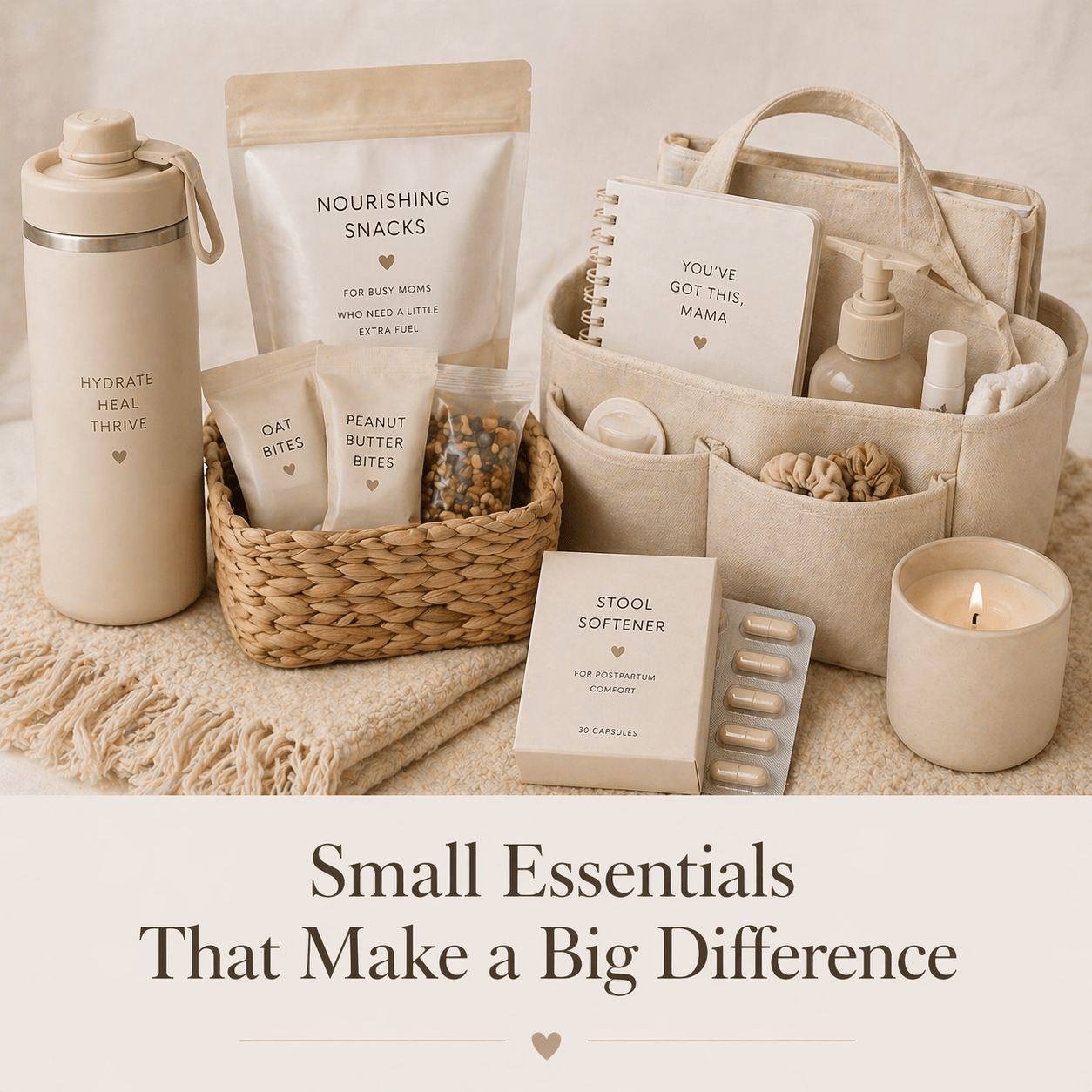
Hydration and simple nourishment also matter during postpartum recovery. Keep water, easy snacks, and gentle meals nearby, especially if you are breastfeeding or pumping. Small things like a water bottle, protein snacks, and a bedside basket can make the day easier.
Physical Postpartum Recovery Tips for New Moms
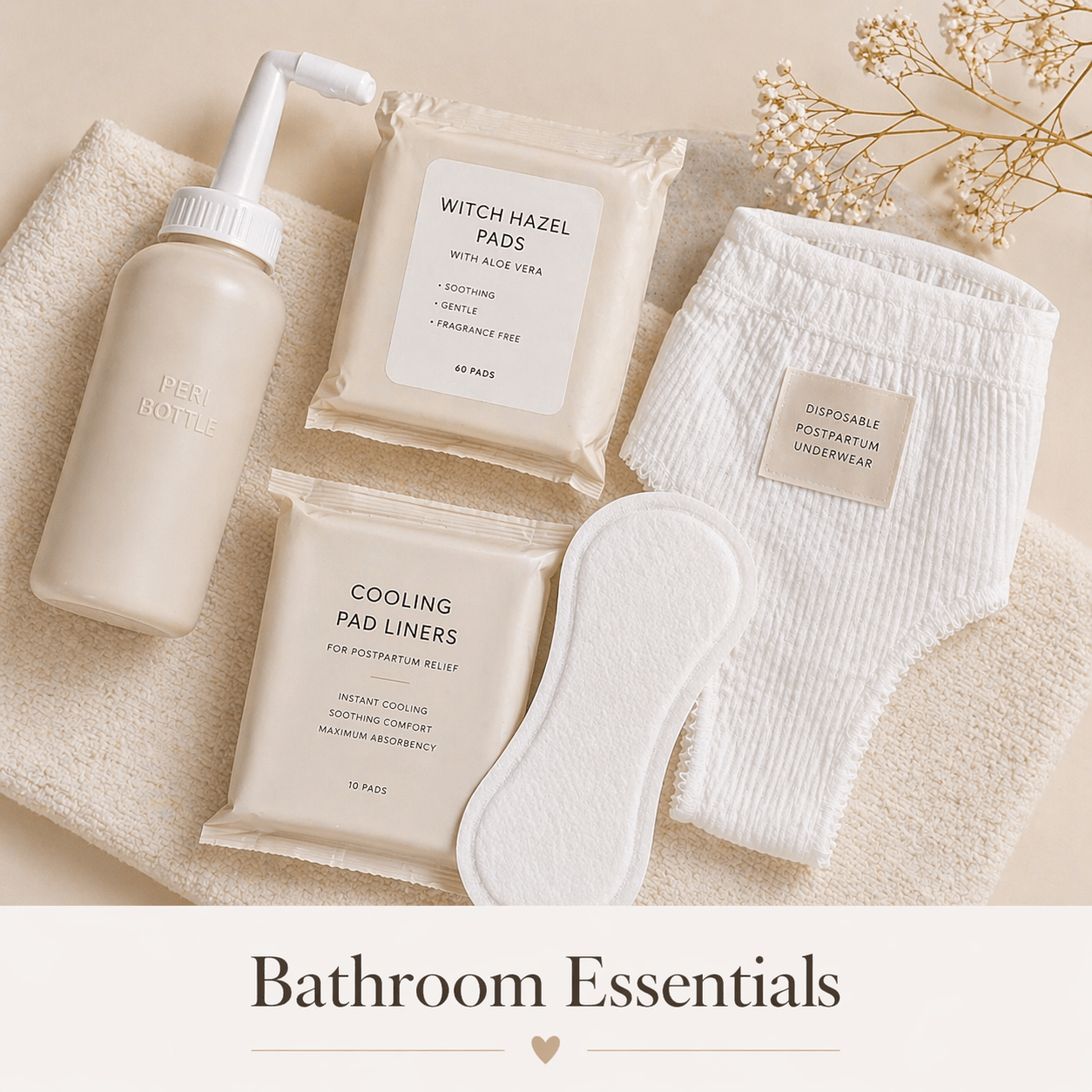
Physical comfort is a major part of postpartum recovery. Bathroom essentials, cooling pads, supportive underwear, perineal care, comfortable clothing, and soft recovery items can help new moms feel more prepared. These products do not replace medical care, but they can make everyday healing feel more manageable.
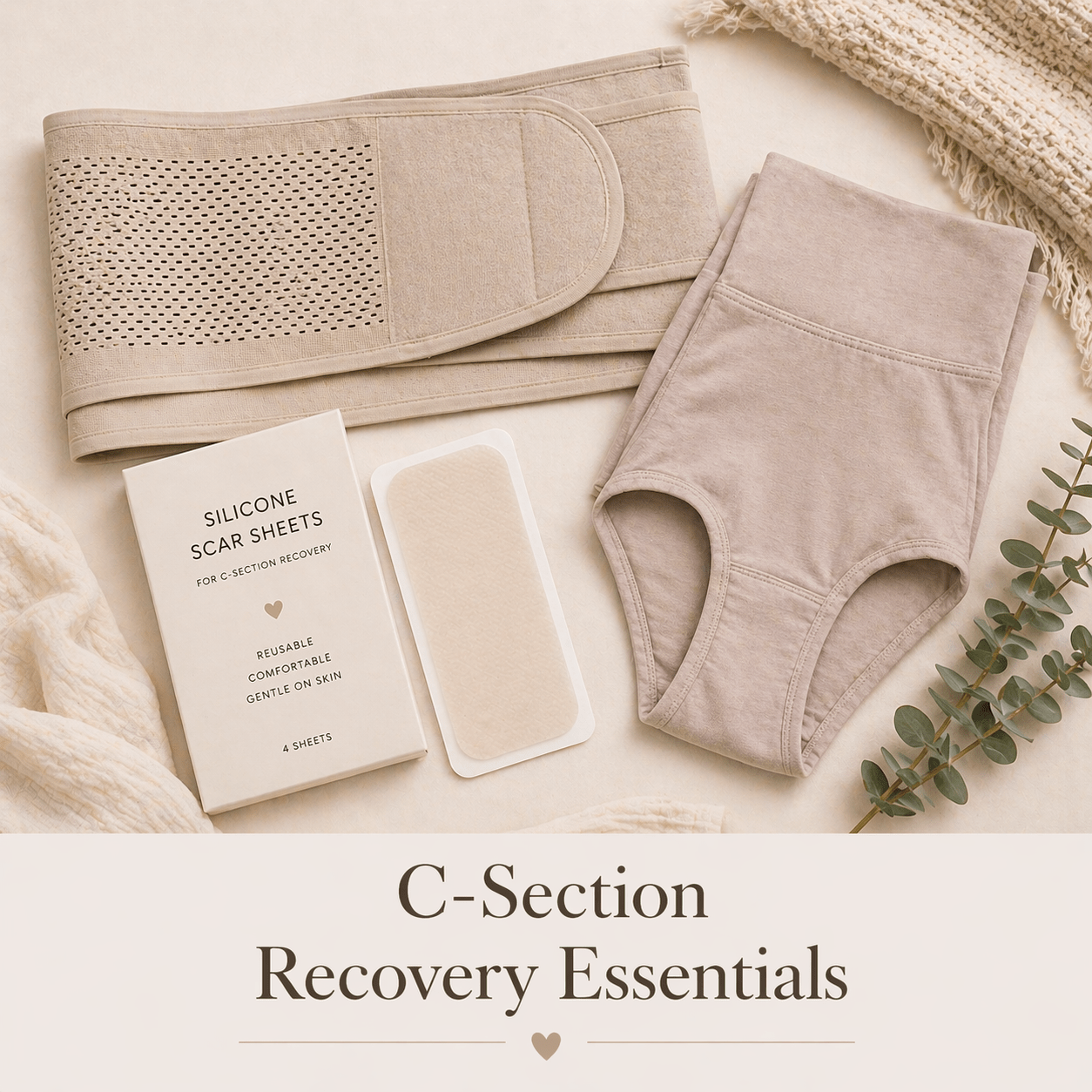
If you had a C-section, recovery may include incision care, limited lifting, extra rest, and gentle belly support. C-section recovery essentials can help you feel more comfortable while your body heals. Always follow your doctor’s instructions and avoid pushing yourself too soon.
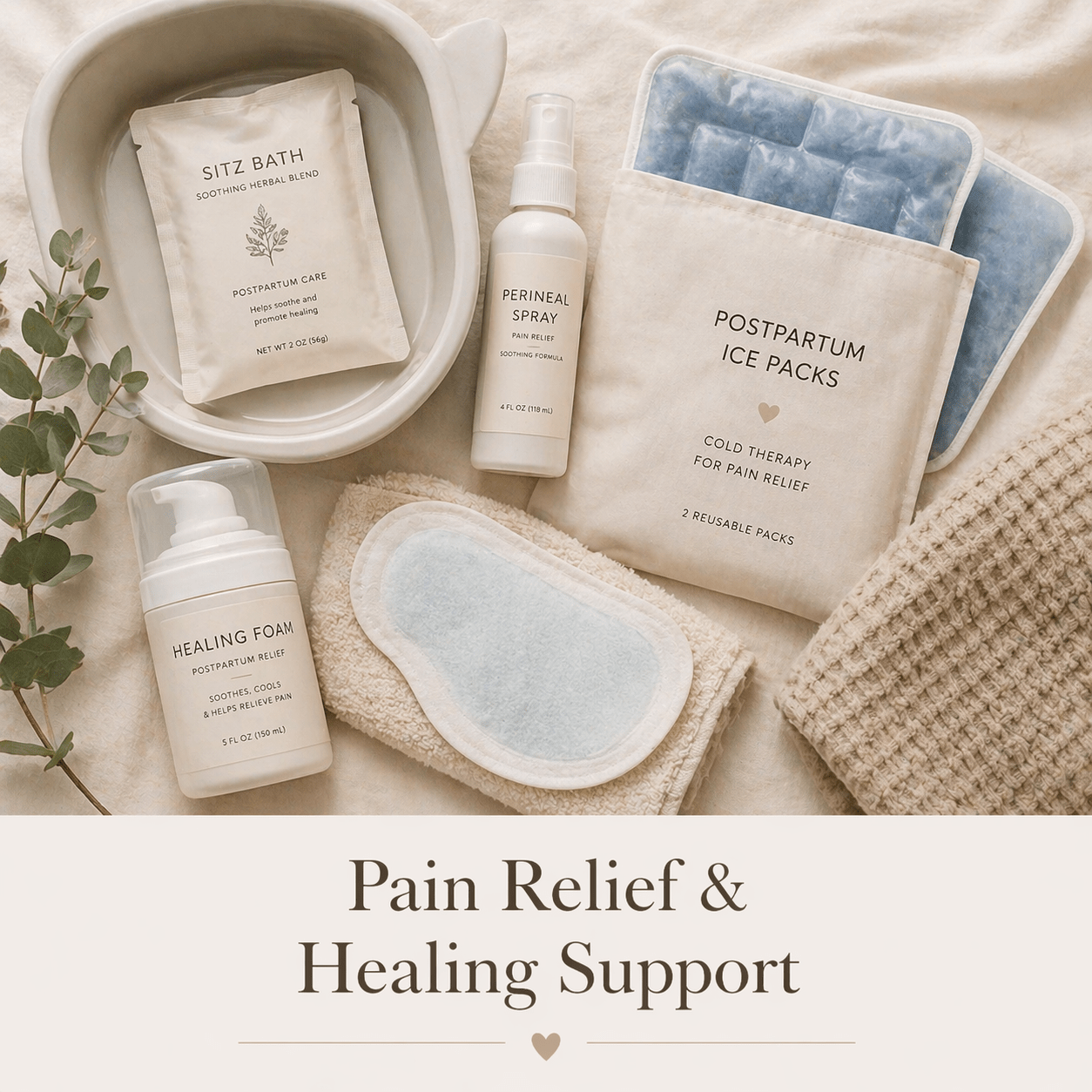
For vaginal birth recovery, bathroom supplies and pain relief items may be especially helpful. A peri bottle, witch hazel pads, cooling liners, sitz bath supplies, and soft postpartum underwear can help reduce discomfort and make bathroom trips less stressful.
Emotional Postpartum Recovery Tips for New Moms
Postpartum recovery tips for new moms should also include emotional care. Many moms experience mood swings, crying spells, worry, or feelings of being overwhelmed. Hormones, lack of sleep, feeding challenges, and the pressure to “bounce back” can all affect how you feel.
Give yourself permission to ask for help. Let someone bring a meal, hold the baby while you shower, fold laundry, or sit with you when the day feels heavy. Postpartum recovery is not meant to be done alone.
It is also important to know when to reach out to a healthcare provider. If sadness, anxiety, panic, intrusive thoughts, or hopeless feelings feel intense or do not improve, contact your doctor. Support is available, and you deserve care too.
Most importantly, remember that postpartum recovery is not a race. Your body has done something powerful. Healing takes time, and you are allowed to move through this season gently.
Postpartum Depression Help and Support
Postpartum depression is not a weakness, and it does not mean you are a bad mom. It is a real health condition that can happen during pregnancy or after birth, and support is available.
If sadness, anxiety, panic, anger, guilt, hopelessness, scary thoughts, or feeling disconnected from your baby lasts longer than a couple of weeks or starts getting worse, reach out to your OB, midwife, primary care doctor, or a mental health professional. You deserve help before it feels unbearable.
If you may hurt yourself, your baby, or someone else, call 911 or go to the nearest emergency room now. If you are in emotional distress or thinking about suicide, call or text 988 for the Suicide & Crisis Lifeline. Do not wait for a regular appointment if you feel unsafe.
National Maternal Mental Health Hotline
Free, confidential support for pregnant and postpartum moms and their families. Available 24/7 in English and Spanish.
Call or text: 1-833-TLC-MAMA
Number: 1-833-852-6262
988 Suicide & Crisis Lifeline
For mental health crisis support, suicidal thoughts, severe emotional distress, or when you need someone right now.
Call or text: 988
Available: 24/7
Postpartum Support International
Support, encouragement, and help finding local postpartum mental health resources. This is helpful when you need connection, support groups, or next steps.
Call: 1-800-944-4773
Text English: 800-944-4773
Text Spanish: 971-203-7773
SAMHSA National Helpline
Free, confidential treatment referral and information for mental health or substance use concerns, available in English and Spanish.
Call: 1-800-662-HELP
Number: 1-800-662-4357
Signs You May Need More Support
- Feeling sad, empty, hopeless, numb, or overwhelmed most of the day.
- Feeling anxious, panicky, angry, guilty, or unable to relax.
- Not enjoying things you normally care about.
- Trouble sleeping even when the baby sleeps, or sleeping too much.
- Feeling disconnected from your baby or afraid you are not a good mom.
- Scary, unwanted, or intrusive thoughts that upset you.
- Thoughts of hurting yourself, your baby, or someone else.
You do not need to have every symptom to ask for help. You can call a hotline, message your doctor, ask your partner or family member to sit with you, or go to the emergency room if you feel unsafe. Getting help is part of taking care of both you and your baby.
Helpful Products for Postpartum Recovery Tips for New Moms
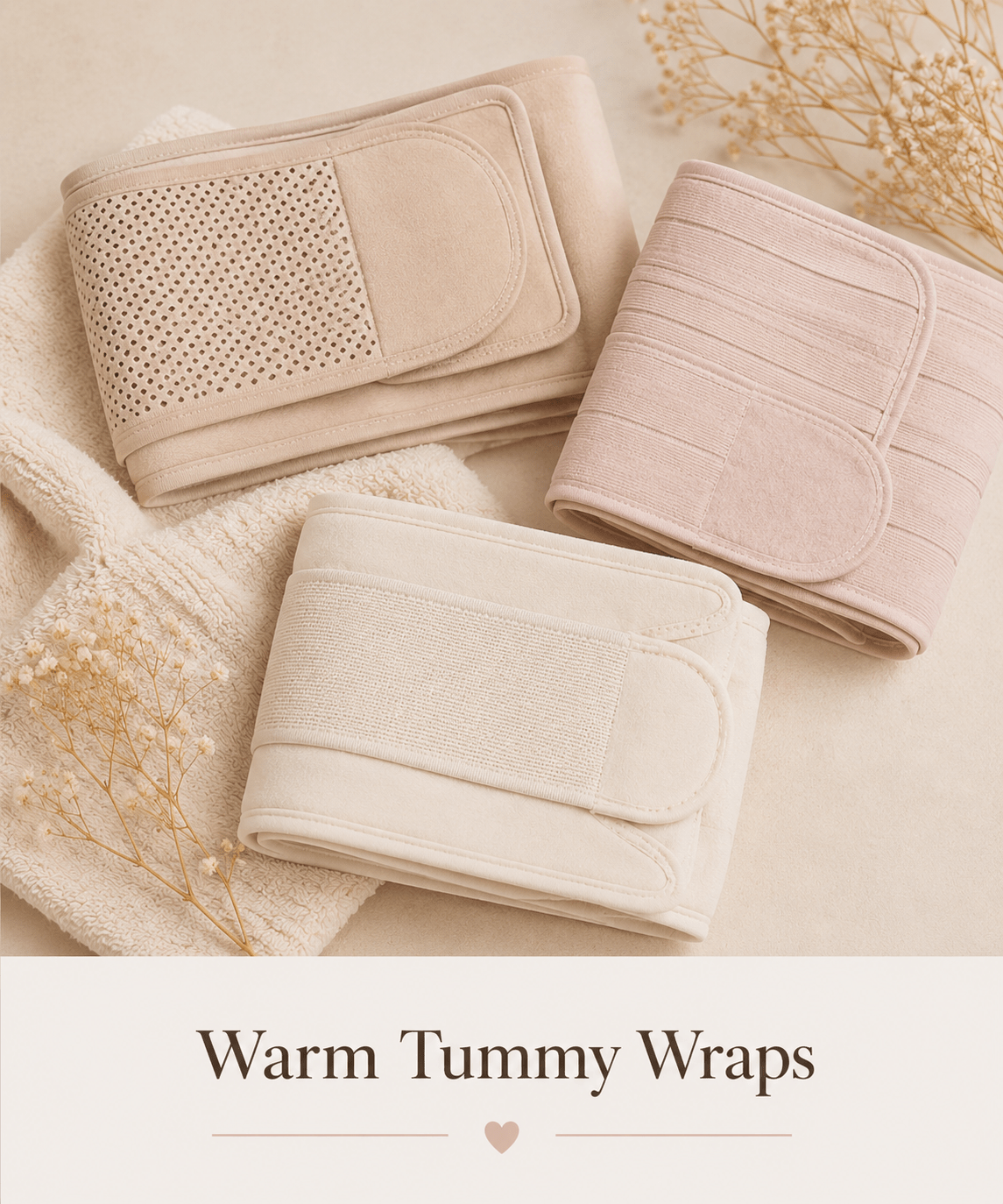
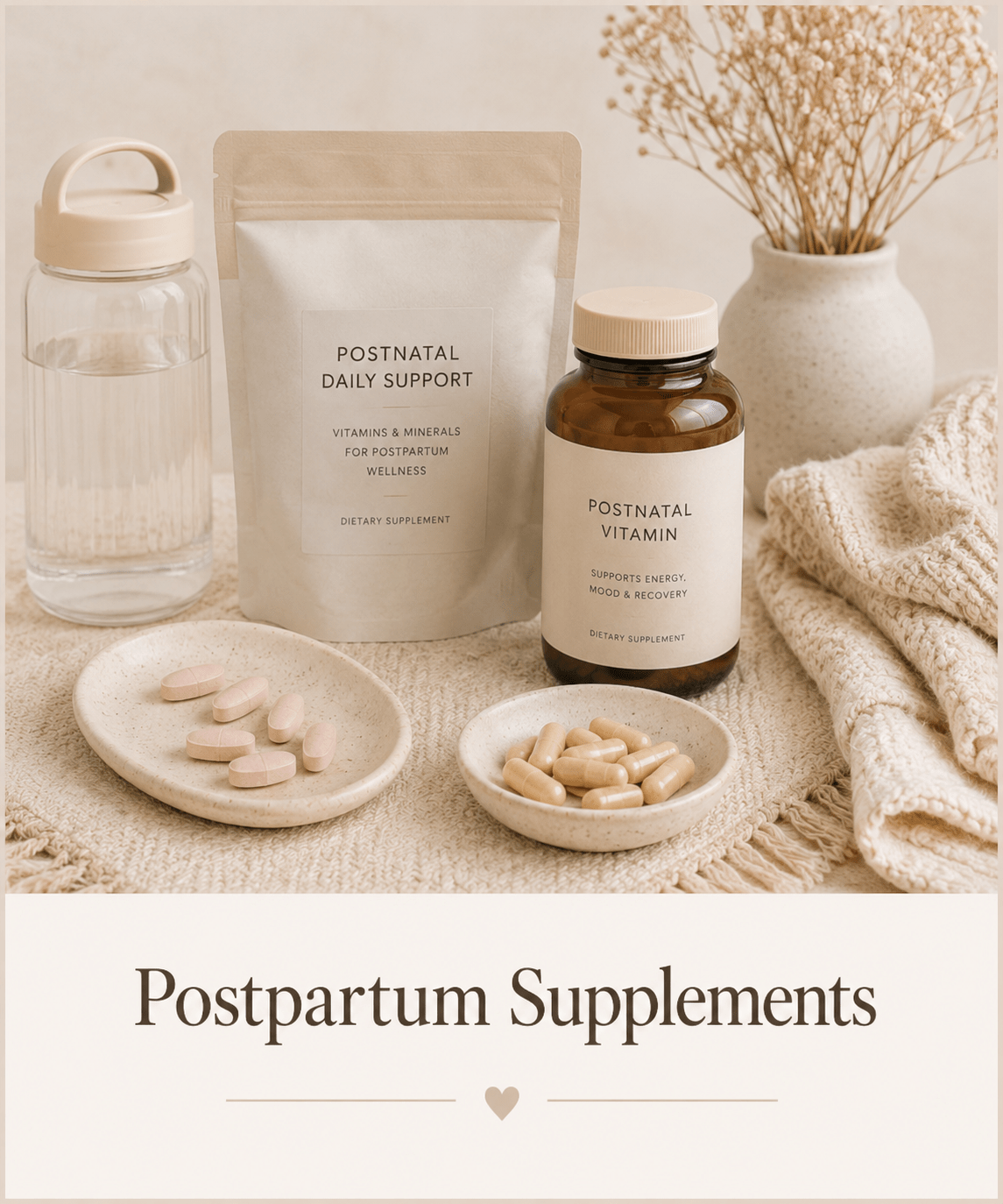
These postpartum recovery essentials can help with comfort, bathroom care, C-section support, pain relief, everyday wear, warm tummy comfort, supplements, and small routines that make the fourth trimester feel a little easier.
More Help for New Moms
Keep reading: New Mom Guide · Baby Tips · Returning to Work After Baby · Best Baby Products
For postpartum health information, visit the Office on Women’s Health postpartum recovery guide.