
17 Weeks Pregnant is a second-trimester week when your baby is growing fast, movement may become easier to see on ultrasound, and your body may feel more obviously pregnant.
17 Weeks Pregnant: Symptoms, Baby Development, and What to Expect
At 17 Weeks Pregnant, your baby is growing quickly, facial features are becoming more defined, the digestive system is working, and some women may begin noticing early flutters.
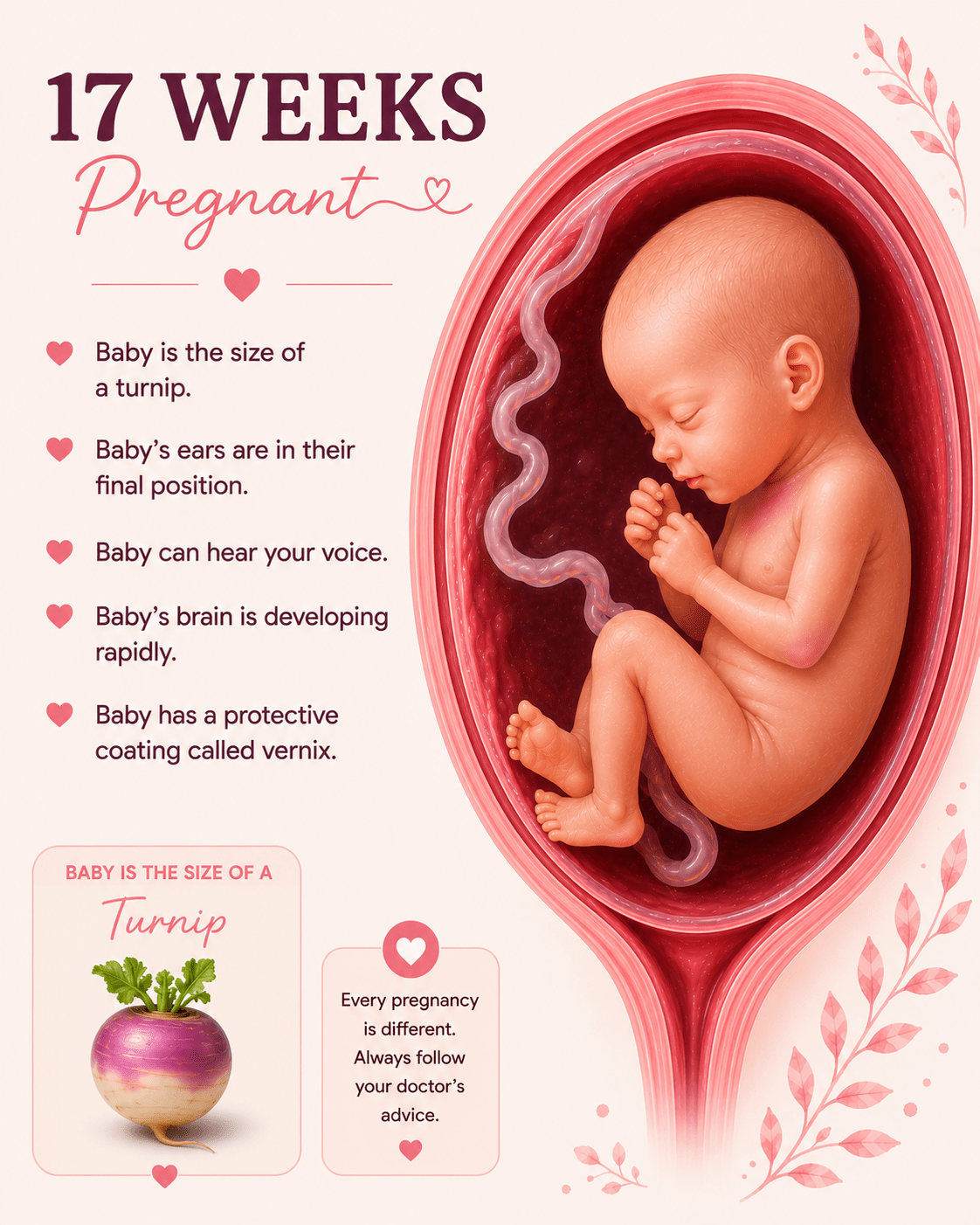
What Does 17 Weeks Pregnant Mean?
17 Weeks Pregnant means you are seventeen weeks into the pregnancy timeline, counted from the first day of your last menstrual period. You are in the second trimester, and your baby is entering a stage of steady growth and more noticeable body development.
At 17 Weeks Pregnant, baby’s movements are becoming more active, even if you cannot feel them yet. The body, arms, and legs are growing quickly, and baby’s features are becoming more recognizable.
ACOG says that during weeks 17 to 20, the part of the brain that controls motor movements is fully formed, the digestive system is working, and the ears, nose, and lips are recognizable on ultrasound. ACOG
This week can also bring more body changes for you. Your uterus is growing, your belly may be rounding, and you may notice stretching, side pains, heartburn, constipation, or back discomfort.
How Big Is Baby at 17 Weeks Pregnant?
At 17 Weeks Pregnant, Tommy’s says baby is about 13 cm long and weighs about 150 g, or about 5 ounces. Tommy’s
Different pregnancy guides may use different fruit or food comparisons for this week. Because those comparisons can vary, the measurement is more important than the exact object used.
At 17 Weeks Pregnant, baby is still small, but the body is growing quickly. The head is still large compared with the body, but the arms, legs, and torso are catching up more each week.
Simple explanation: At 17 Weeks Pregnant, baby may be around 13 cm long and about 5 ounces. Baby is growing quickly, moving around, and becoming more recognizable.
17 Weeks Pregnant Baby Development
At 17 Weeks Pregnant, baby development is focused on growth, movement, and body systems continuing to mature. The digestive system is working, and the part of the brain that controls motor movements is formed. ACOG
Tommy’s explains that by the start of the 17th week, baby’s eyelashes and eyebrows are starting to grow, and baby already has unique fingerprints. The body, arms, and legs are growing fast to catch up with the head. Tommy’s
Cleveland Clinic notes that during weeks 17 through 20, many people begin to feel fetal movement, called quickening. These first movements can feel like a flutter. Cleveland Clinic
At 17 Weeks Pregnant, baby may also be practicing movements, swallowing amniotic fluid, and continuing to build strength. You may not feel those movements yet, but baby is active inside the uterus.
17 Weeks Pregnant Symptoms
17 Weeks Pregnant symptoms can feel different from earlier pregnancy. Some women feel better now that they are in the second trimester, while others still have nausea, fatigue, headaches, constipation, heartburn, or body aches.
Common symptoms around 17 Weeks Pregnant may include a growing belly, stretching pains, bloating, constipation, indigestion, heartburn, headaches, dizziness, swollen or bleeding gums, nosebleeds, breast changes, increased discharge, and mild cramping or side pains.
You may also notice your center of gravity beginning to shift as your belly grows. This can make your back, hips, or lower belly feel different, especially after standing or walking for a while.
- A growing belly or tighter waistbands.
- Round ligament-type pulling or side belly pains.
- Bloating, constipation, indigestion, or heartburn.
- Breast growth, tenderness, or nipple changes.
- Headaches, dizziness, or nosebleeds.
- Swollen or bleeding gums.
- White milky discharge, mild cramping, or light spotting for some women.
- Possible early flutters, bubbles, or rolling feelings.
Is Cramping Normal at 17 Weeks Pregnant?
Mild cramping at 17 Weeks Pregnant can happen. Your uterus is growing, ligaments are stretching, and digestion can still be slower because of pregnancy hormones.
Some women feel pulling, stretching, or side pains around this time. These sensations can be related to the expanding womb, but severe pain should always be checked.
Call your doctor right away if cramping is severe, one-sided, comes with heavy bleeding, shoulder pain, dizziness, fainting, fever, leaking fluid, or pain that feels very different from normal pregnancy discomfort.
Is Spotting Normal at 17 Weeks Pregnant?
Some women have light spotting at 17 Weeks Pregnant. Light spotting does not always mean something is wrong, but bleeding during pregnancy should still be mentioned to your healthcare provider.
If spotting becomes heavy, bright red, painful, or comes with dizziness, shoulder pain, one-sided pelvic pain, leaking fluid, or severe cramping, call your doctor quickly.
Your provider may recommend monitoring, bloodwork, an exam, or an ultrasound depending on your symptoms. It is better to call and ask than to guess.
Can You See Baby on Ultrasound at 17 Weeks Pregnant?
At 17 Weeks Pregnant, ultrasound can show baby much more clearly than earlier weeks. Baby may move, stretch, bend limbs, or change position during the scan.
ACOG notes that during weeks 17 to 20, the ears, nose, and lips are recognizable on ultrasound. ACOG
Some women may have an ultrasound around this time because of screening, symptoms, or provider preference, while many will have the detailed anatomy scan closer to 18 to 22 weeks.
Can You Feel Baby Move at 17 Weeks Pregnant?
At 17 Weeks Pregnant, some women may begin feeling early baby movement, especially if this is not their first pregnancy. Others will not feel anything yet, and that can still be normal.
The NHS says many women notice the first signs of baby moving between 18 and 24 weeks. Early movement may feel like bubbling, fluttering, or rolling. NHS
If you do not feel movement at 17 Weeks Pregnant, that does not automatically mean anything is wrong. Clear, regular movement patterns usually come later.
What Your Body May Be Doing at 17 Weeks Pregnant
At 17 Weeks Pregnant, your uterus is growing and your body may feel more obviously pregnant. Your belly may be rounding, your waistline may be changing, and stretchy clothing may feel more comfortable.
Your digestion may still be slower, which can cause bloating, constipation, or heartburn. Drinking fluids, eating fiber-rich foods, and asking your provider about safe options can help if constipation is bothering you.
You may also notice back discomfort, hip pressure, breast changes, skin changes, or gums that bleed more easily. These can happen in pregnancy, but severe pain, heavy bleeding, or leaking fluid should be checked right away.
What to Do at 17 Weeks Pregnant
If you are 17 Weeks Pregnant, this is a good time to confirm your next prenatal appointment and ask about your anatomy scan timing. Many anatomy scans are scheduled later in the second trimester.
Keep taking a prenatal vitamin if your provider recommends it. Ask before starting, stopping, or changing medications, supplements, or herbal products.
You may want to ask your provider about safe exercise, food safety, dental care, travel, work concerns, back pain relief, anatomy scan timing, and which symptoms should be reported right away.
- Confirm your next prenatal appointment.
- Ask about anatomy scan timing or upcoming testing.
- Keep taking a prenatal vitamin if recommended.
- Ask your provider about medication and supplement safety.
- Drink fluids and eat balanced meals when possible.
- Take care of your teeth and gums.
- Call your provider for bleeding, severe pain, leaking fluid, or dehydration.
What to Eat at 17 Weeks Pregnant
At 17 Weeks Pregnant, appetite may feel more normal for some women. If nausea has eased, this can be a good time to focus on simple balanced meals with protein, fruits, vegetables, whole grains, healthy fats, and fluids.
If heartburn or indigestion is bothering you, smaller meals, slower eating, and avoiding lying down right after eating may help. If constipation is an issue, ask your provider about safe ways to increase fiber and fluids.
If nausea is still present, keep meals small and manageable. Bland foods, cold foods, soups, yogurt, fruit, toast, rice, potatoes, noodles, cereal, or simple protein options may still be easier to tolerate.
What Not to Worry About Too Much at 17 Weeks Pregnant
It is normal to feel emotional at 17 Weeks Pregnant. You may be excited for movement or the anatomy scan, but still anxious about symptoms, baby growth, or whether everything is okay.
It is also normal if you do not feel baby move yet. Some women feel early flutters around this stage, but many do not feel clear movement until later.
Try not to compare your bump, symptoms, movement timing, scan timing, or energy level to someone else’s. Every pregnancy has its own pattern.
When to Call Your Doctor
Most mild symptoms at 17 Weeks Pregnant can be normal, but some symptoms should be checked quickly. Trust your instincts if something feels severe, unusual, or unsafe.
Call your doctor right away for heavy bleeding, severe cramping, one-sided pelvic pain, shoulder pain, dizziness, fainting, fever, leaking fluid, or vomiting that keeps you from holding down fluids. This page is for general education and does not replace medical care.
17 Weeks Pregnant Summary
17 Weeks Pregnant is an active second-trimester week. Baby may be about 13 cm long and about 5 ounces, facial features are becoming more recognizable, the digestive system is working, and the body is growing quickly.
The most important things to know about 17 Weeks Pregnant are simple: baby movement may start soon, early flutters can happen for some women, it is still normal not to feel movement yet, and your anatomy scan may be coming up in the next few weeks.
If you are 17 Weeks Pregnant, keep taking care of your body, stay in contact with your healthcare provider, and call right away for heavy bleeding, severe pain, leaking fluid, dehydration, or symptoms that worry you.