
30 Weeks Pregnant is part of the third trimester. At 30 weeks pregnant, baby is growing quickly, movement may feel stronger, sleep may be harder, and your body may feel more pressure as the final weeks continue.
30 Weeks Pregnant: Symptoms, Baby Development, and What to Expect
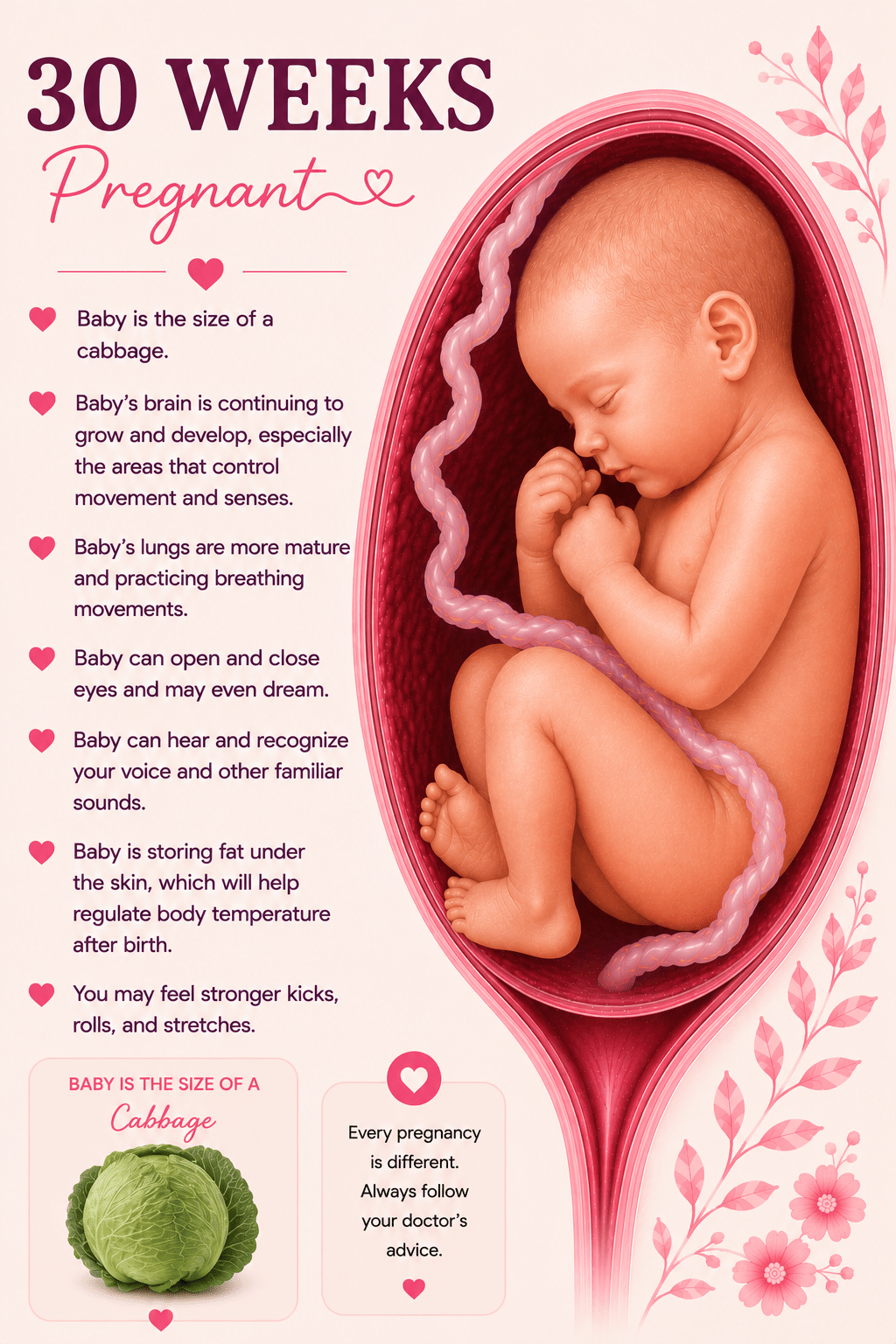
At 30 Weeks Pregnant, your baby is about the size of a cabbage, the eyes can focus, the brain is growing quickly, and third trimester symptoms like shortness of breath, heartburn, backache, swelling, and trouble sleeping may become more noticeable.
What Does 30 Weeks Pregnant Mean?
30 Weeks Pregnant means you are thirty weeks into the pregnancy timeline, counted from the first day of your last menstrual period. You are in the third trimester, and baby is still growing, gaining strength, and preparing for birth.
At 30 Weeks Pregnant, baby may feel active at certain times of day. You may notice kicks, rolls, stretches, turns, or pressure as your baby moves. Your belly may feel heavier, and symptoms like shortness of breath, tiredness, heartburn, backache, swelling, vivid dreams, and sleep problems may be more obvious.
The NHS says that at 30 weeks, baby is around 39.9 cm long from head to heel, about the size of a cabbage. The NHS also says your baby’s eyes can now focus, and vision will continue to develop inside and outside the womb. NHS
At 30 Weeks Pregnant, your provider may also discuss third trimester visits, movement awareness, sleep position, swelling, heartburn, leg cramps, birth planning, work adjustments, vaccines, and which symptoms should be reported right away.
30 Weeks Pregnant Baby Size
At 30 Weeks Pregnant, baby is about the size of a cabbage according to the NHS. The NHS gives a measurement of around 39.9 cm from head to heel. NHS
Size comparisons can vary by pregnancy guide, but a cabbage is the week-specific comparison from the NHS. The main point is that baby is growing, gaining fat, and continuing to mature.
At 30 Weeks Pregnant, baby is still premature, but each week helps the brain, lungs, feeding ability, immune system, body temperature control, and overall strength continue to develop.
Simple explanation: At 30 Weeks Pregnant, baby is about the size of a cabbage according to the NHS and measures around 39.9 cm from head to heel.
30 Weeks Pregnant Baby Development
At 30 Weeks Pregnant, baby development is focused on growth, brain development, body temperature control, movement, fat gain, and continued lung maturity. ACOG says that during weeks 29 to 32, the fetus can stretch, kick, and make grasping motions. ACOG also says the eyes can sense changes in light, bone marrow is forming red blood cells, and lanugo begins to disappear. ACOG
ACOG also notes that during weeks 29 to 32, the eyes can open and close and sense changes in light. This fits with the third trimester pattern of baby becoming more responsive while still needing more time to mature. ACOG
Mayo Clinic says that at week 30, your baby’s eyes can open wide, baby may have a good head of hair, and red blood cells are forming in the bone marrow. Mayo Clinic also gives an estimated weight of nearly 3 pounds by this week. Mayo Clinic
Cleveland Clinic says that at week 30, the fetus can control its own body heat, and the brain is maturing and growing rapidly. Cleveland Clinic
At 30 Weeks Pregnant, baby may sleep, wake, kick, roll, stretch, respond to sounds, swallow amniotic fluid, practice breathing movements, and have active and quiet times. Baby still needs more time in the womb for the brain, lungs, immune system, feeding reflexes, and temperature control to mature.
30 Weeks Pregnant Symptoms
30 Weeks Pregnant symptoms may feel more intense because your belly is growing and the third trimester is underway. Your uterus is higher, baby is taking up more room, and your back, hips, ribs, pelvis, legs, and lower belly may all feel more pressure.
The NHS lists common symptoms at 30 weeks, including sleeping problems, stretch marks, swollen and bleeding gums, round ligament pains, piles, headaches, backache, indigestion and heartburn, bloating and constipation, leg cramps, feeling hot, dizziness, swollen hands and feet, urine infections, vaginal infections, skin changes, thicker or shinier hair, mood swings, cravings, heightened sense of smell, sore or leaky breasts, white milky discharge, and light spotting that should be checked if there is bleeding. NHS
You may also notice occasional belly tightening. Some women experience Braxton Hicks contractions during pregnancy. These are often irregular and may ease with rest, fluids, or changing positions, but regular tightening, painful contractions, bleeding, leaking fluid, or strong pelvic pressure should be checked right away.
- A growing belly or tighter clothing.
- Backache, hip discomfort, rib discomfort, or pelvic pressure.
- Shortness of breath or feeling winded more easily.
- Bloating, constipation, indigestion, heartburn, or piles.
- Headaches, dizziness, nosebleeds, or bleeding gums.
- Leg cramps, feeling hot, or trouble getting comfortable at night.
- Swollen feet, ankles, hands, or fingers.
- Vivid dreams, anxiety about birth, or trouble sleeping.
- White milky discharge, mild cramping, or occasional light spotting for some women.
- Stronger rolls, taps, kicks, turns, stretches, or nudges.
30 Weeks Pregnant Baby Movement
At 30 Weeks Pregnant, many women feel baby move clearly. Movements may feel like kicks, rolls, taps, nudges, stretches, turns, little punches, or pressure as baby shifts position.
By 30 Weeks Pregnant, you may be learning your baby’s normal active times. Movement may be more noticeable after meals, when you are resting, or when you lie down at night. Baby can also have sleep and wake patterns that do not always match your schedule.
The NHS says you should feel your baby move right up to and during labor. The NHS also says there is no set number of movements you should feel each day, but you should get to know your baby’s usual pattern and call immediately if baby is moving less than usual, you cannot feel movement anymore, or the usual pattern changes. NHS
30 Weeks Pregnant Cramping
Mild cramping at 30 Weeks Pregnant can happen. Your uterus is growing, ligaments are stretching, and digestion may still be slower because of pregnancy hormones.
Some women feel pulling, stretching, or side pains around this time. Occasional mild tightening can also happen. However, severe pain, regular tightening, or cramping that feels different from your normal should be checked.
Call your doctor right away if cramping is severe, one-sided, comes with heavy bleeding, shoulder pain, dizziness, fainting, fever, leaking fluid, regular tightening, pelvic pressure, or pain that feels very different from normal pregnancy discomfort.
30 Weeks Pregnant Spotting
Some women have light spotting at 30 Weeks Pregnant. Light spotting does not always mean something is wrong, but bleeding during pregnancy should still be mentioned to your healthcare provider.
If spotting becomes heavy, bright red, painful, or comes with dizziness, shoulder pain, one-sided pelvic pain, leaking fluid, regular contractions, pelvic pressure, or severe cramping, call your doctor quickly.
Your provider may recommend monitoring, an exam, bloodwork, or an ultrasound depending on your symptoms. It is better to call and ask than to guess.
30 Weeks Pregnant Appointments
At 30 Weeks Pregnant, prenatal visits may be happening more often because you are in the third trimester. Your provider may check your blood pressure, weight, urine, belly measurement, baby’s heartbeat, swelling, symptoms, and any concerns you have.
Cleveland Clinic says prenatal visits in the third trimester are usually scheduled more frequently to check the health of the fetus, and typical checks may include blood pressure, weight, fundal height, fetal heart rate, urine, and vaccine guidance. Cleveland Clinic
The NHS also says the whooping cough vaccine should be given before week 33 when possible, and the RSV vaccine is usually offered around week 28 but may be given later if needed, right up until labor. Ask your own provider what vaccine timing applies to your location and pregnancy. NHS
This is a good week to ask about baby movement, swelling, sleep position, back pain, travel rules, work restrictions, vaccine timing, birth classes, preterm labor symptoms, and when to call the office or hospital.
30 Weeks Pregnant Third Trimester
30 Weeks Pregnant is in the third trimester. Cleveland Clinic describes the third trimester as the final months of pregnancy, when the fetus gains weight more rapidly and organs mature to prepare for birth. Cleveland Clinic
The third trimester can bring more physical pressure, stronger movement, more frequent appointments, and more focus on birth preparation. It can also bring more emotions because the due date starts to feel closer.
Even though 30 weeks is an exciting milestone, baby still benefits from more time to grow and mature. The brain, lungs, body fat, feeding reflexes, and temperature control are still developing.
30 Weeks Pregnant Sleep and Comfort
At 30 Weeks Pregnant, sleep may become harder. Your belly is bigger, your hips may ache, heartburn may be worse, and baby may feel more active when you are trying to rest.
The NHS says you may be having trouble sleeping at 30 weeks, and strange or disturbing dreams can happen. The NHS explains these dreams are not real and may be fueled by hormones and anxiety about the changes ahead. NHS
Tommy’s says that in the third trimester, you should go to sleep on your side, including during daytime naps. If you wake up on your back, turn back onto your side and try not to panic. Tommy’s
If lying flat makes you feel dizzy, short of breath, faint, or uncomfortable, change positions and let your provider know. Pillows, side sleeping, smaller meals at night, and resting when you can may help.
30 Weeks Pregnant Breathing and Heartburn
At 30 Weeks Pregnant, shortness of breath and heartburn can become more noticeable. Your growing uterus can push upward, making stairs, walking, or lying down feel harder.
The NHS says it may be more effort to walk up stairs without getting out of breath because your baby is pushing against your lungs. If breathlessness is severe, sudden, comes with chest pain, fainting, blue lips, or you feel very unwell, seek medical care right away. NHS
For heartburn, smaller meals, sitting upright after eating, avoiding trigger foods, and asking your provider about pregnancy-safe treatment may help. Do not start new medication without checking with your healthcare provider.
30 Weeks Pregnant Ultrasound
At 30 Weeks Pregnant, not everyone has an ultrasound. Some pregnancies may have growth scans, placenta checks, follow-up anatomy images, fluid checks, or other ultrasounds depending on medical history and provider preference.
Baby may move, kick, stretch, turn, open and close the eyes, or change position during a scan. Sometimes baby’s position makes it hard to get every image, and that does not automatically mean something is wrong.
Your provider will explain what they see based on baby’s measurements, your dates, placenta location, amniotic fluid, and your medical history.
30 Weeks Pregnant Body Changes
At 30 Weeks Pregnant, your belly may feel heavier and your posture may be changing. Your lower back may work harder, your hips or pelvis may feel more pressure, and you may need more breaks during the day.
Digestion may still be slower, causing bloating, constipation, piles, and heartburn. Drinking fluids, eating fiber-rich foods, moving gently if approved, and asking your provider about safe options may help.
You may also notice skin stretching, more visible veins, breast changes, leg cramps, trouble sleeping, swelling, or occasional belly tightening. These can happen in pregnancy, but severe pain, heavy bleeding, leaking fluid, regular tightening, or movement concerns should be checked right away.
What to Do at 30 Weeks Pregnant
If you are 30 Weeks Pregnant, keep up with prenatal care and ask what appointments, vaccines, or tests are coming next. This may include Tdap timing, RSV vaccine timing depending on your provider and season, Rh immune globulin if needed, growth monitoring if needed, and third trimester appointment planning.
The NHS says week 30 can be a good time to think about baby clothes you might need, but it also reminds parents that babies grow out of clothes quickly, so you do not need loads. NHS
Tommy’s also says antenatal classes can help you learn about labor, staying healthy during pregnancy, and looking after and feeding your baby. Ask your provider or local hospital what options are available. Tommy’s
You may want to ask your provider about movement expectations, swelling, sleep position, safe exercise, travel rules, work concerns, back pain relief, preterm labor signs, and which symptoms should be reported right away.
- Confirm your next prenatal appointment.
- Ask about Tdap, RSV vaccine timing, and Rh immune globulin if it applies to you.
- Ask about baby movement patterns and when to call.
- Start or update a simple hospital bag list.
- Think about birth preferences, but stay flexible.
- Check whether antenatal or childbirth classes are available.
- Drink fluids and eat balanced meals when possible.
- Call your provider for bleeding, severe pain, leaking fluid, regular tightening, or movement concerns.
What to Eat at 30 Weeks Pregnant
At 30 Weeks Pregnant, balanced meals with protein, fruits, vegetables, whole grains, healthy fats, and fluids can help support your body during the third trimester.
The NHS says that in the third trimester, you may need about an extra 200 calories a day, but not much more than that. The NHS also recommends a healthy balanced diet with a variety of foods every day, including plenty of fruit and vegetables. NHS
If heartburn or constipation is bothering you, smaller meals, slower eating, fluids, fiber-rich foods, and avoiding lying down right after eating may help. Ask your provider before taking medicines, supplements, or stool softeners.
What Not to Worry About Too Much at 30 Weeks Pregnant
It is normal to feel emotional at 30 Weeks Pregnant. You may feel excited, nervous, impatient, tired, uncomfortable, or worried about birth. The third trimester can make everything feel more real.
Movement may have active and quiet times, but you should still pay attention to what is normal for your baby. If movement seems clearly reduced or different, call your provider right away.
Try not to compare your bump, symptoms, movement pattern, scan results, or energy level to someone else’s. Every pregnancy has its own pattern.
When to Call Your Doctor at 30 Weeks Pregnant
Most mild symptoms at 30 Weeks Pregnant can be normal, but some symptoms should be checked quickly. Trust your instincts if something feels severe, unusual, or unsafe.
Call your doctor right away for heavy bleeding, severe cramping, one-sided pelvic pain, shoulder pain, dizziness, fainting, fever, leaking fluid, regular tightening, strong pelvic pressure, vomiting that keeps you from holding down fluids, sudden swelling, severe headache, vision changes, chest pain, severe shortness of breath, or movement that seems clearly reduced from your baby’s normal pattern. This page is for general education and does not replace medical care.
30 Weeks Pregnant Summary
30 Weeks Pregnant is part of the third trimester. At 30 weeks pregnant, baby is about the size of a cabbage according to the NHS, baby’s eyes can focus, red blood cells are forming in the bone marrow, the brain is growing quickly, and baby is continuing to gain fat.
The most important things to know about 30 Weeks Pregnant are simple: baby movement matters, sleep may be harder, third trimester appointments may continue, and it is time to pay close attention to symptoms like bleeding, leaking fluid, regular tightening, severe pain, swelling, chest pain, shortness of breath, or movement changes.
If you are 30 Weeks Pregnant, keep taking care of your body, stay in contact with your healthcare provider, and call right away for heavy bleeding, severe pain, leaking fluid, regular tightening, dehydration, movement concerns, or symptoms that worry you.