
19 Weeks Pregnant is a second-trimester week when your baby is putting on weight, movement may become more noticeable, and the anatomy scan may be happening soon.
19 Weeks Pregnant: Symptoms, Baby Development, and What to Expect
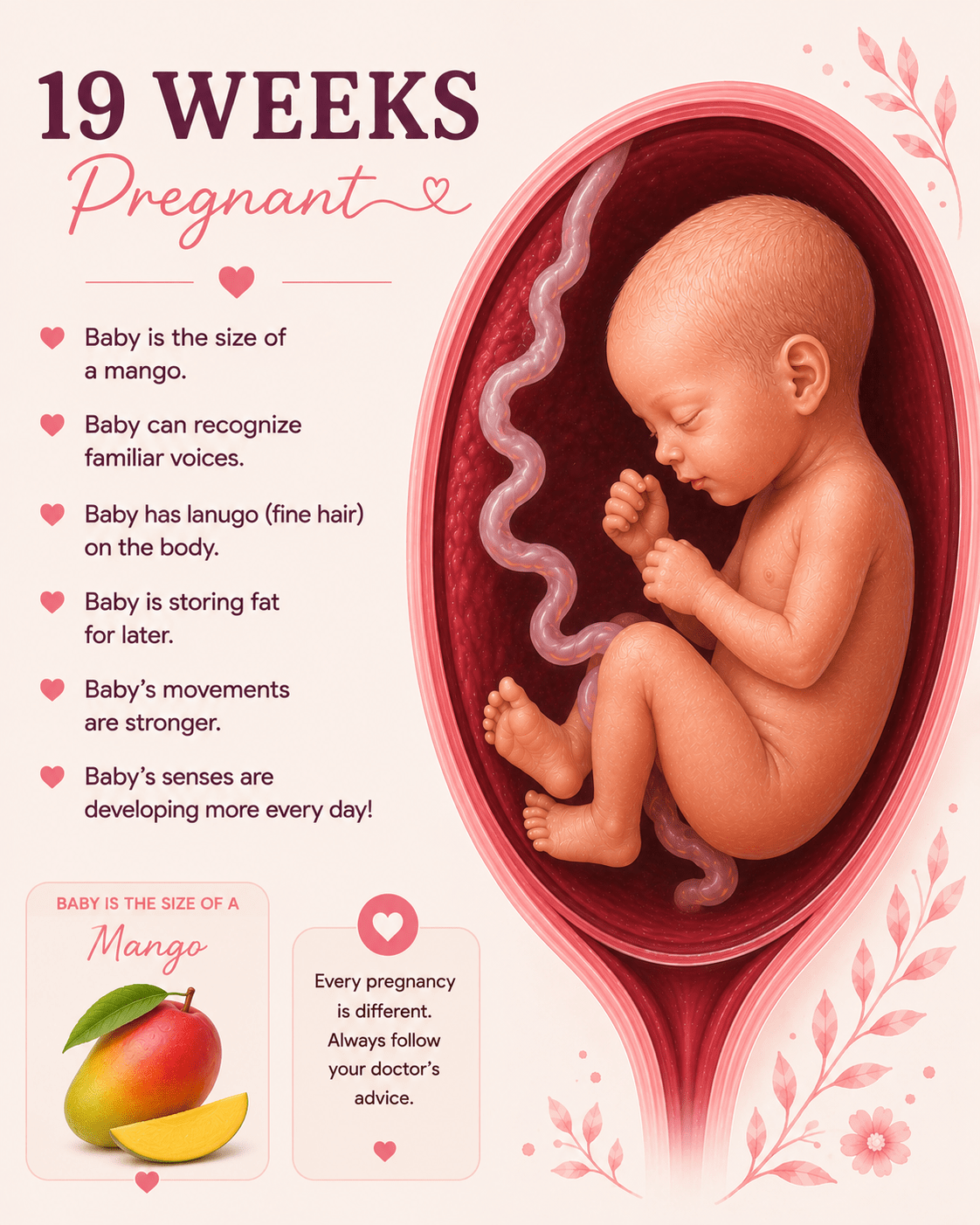
At 19 Weeks Pregnant, your baby is about the size of a beef tomato, vernix begins protecting the skin, adult teeth are starting to grow behind the first teeth, and early movement may feel like flutters.
What Does 19 Weeks Pregnant Mean?
19 Weeks Pregnant means you are nineteen weeks into the pregnancy timeline, counted from the first day of your last menstrual period. You are in the second trimester, and you are getting close to the halfway point of pregnancy.
At 19 Weeks Pregnant, baby is growing, moving, swallowing, making urine, and continuing to develop important body systems. This week is also close to the common anatomy scan window, when many providers take a detailed look at baby’s organs and growth.
The NHS says that at 19 weeks, baby is around 15.3 cm long from head to bottom, about the size of a beef tomato. Adult teeth are starting to grow and line up behind the first set of teeth, and baby is putting on weight. NHS
You may also start feeling more physical changes now. Your belly may be growing, your clothes may feel tighter, and you may notice stretching pains, backache, heartburn, constipation, or early flutters.
How Big Is Baby at 19 Weeks Pregnant?
At 19 Weeks Pregnant, the NHS says baby is around 15.3 cm long from head to bottom, which is about the size of a beef tomato. NHS
Size comparisons can vary by pregnancy guide, but beef tomato is a reliable week-specific comparison from the NHS. The most important point is that baby is growing steadily and gaining weight.
At 19 Weeks Pregnant, baby is still small, but movement is getting stronger. Some women begin recognizing movement around this stage, while others will not feel clear movement until later.
Simple explanation: At 19 Weeks Pregnant, baby is about the size of a beef tomato according to the NHS. Baby is growing, gaining weight, and moving more.
19 Weeks Pregnant Baby Development
At 19 Weeks Pregnant, baby development includes growth, movement, skin protection, and continued organ development. Mayo Clinic says that at 19 weeks, a greasy, cheese-like coating called vernix caseosa starts to cover baby. Vernix helps protect the delicate skin from amniotic fluid. Mayo Clinic
Mayo Clinic also explains that baby is starting to release urine, which now makes up most of the amniotic fluid. Mayo Clinic
ACOG explains that during weeks 17 to 20, the part of the brain that controls motor movements is fully formed, the digestive system is working, the ears, nose, and lips are recognizable on ultrasound, and soft hair called lanugo covers the body. ACOG
Tommy’s says baby is starting to look a little plumper and less wrinkly as thin layers of fat begin to form. Baby is also covered with lanugo, the fine hair that helps keep baby warm while growing. Tommy’s
19 Weeks Pregnant Symptoms
19 Weeks Pregnant symptoms may feel more like second-trimester body changes than early pregnancy symptoms. Some women feel better than they did in the first trimester, while others still deal with nausea, fatigue, headaches, heartburn, constipation, or body aches.
Common symptoms around 19 Weeks Pregnant may include a growing belly, stretching pains, bloating, constipation, indigestion, heartburn, backache, headaches, dizziness, swollen or bleeding gums, nosebleeds, breast changes, increased discharge, and mild cramping or side pains.
You may also begin noticing baby movement. Early movement may feel like bubbles, flutters, rolling, tapping, or tiny flicks. It may be easy to miss at first, especially if this is your first pregnancy.
- A growing belly or tighter waistbands.
- Round ligament-type pulling or side belly pains.
- Bloating, constipation, indigestion, or heartburn.
- Backache, hip discomfort, or pelvic pressure.
- Headaches, dizziness, or nosebleeds.
- Swollen or bleeding gums.
- White milky discharge, mild cramping, or light spotting for some women.
- Possible flutters, bubbles, taps, or rolling feelings.
Is Cramping Normal at 19 Weeks Pregnant?
Mild cramping at 19 Weeks Pregnant can happen. Your uterus is growing, ligaments are stretching, and digestion can still be slower because of pregnancy hormones.
Some women feel pulling, stretching, or side pains around this time. These sensations can be related to the expanding womb, but severe pain should always be checked.
Call your doctor right away if cramping is severe, one-sided, comes with heavy bleeding, shoulder pain, dizziness, fainting, fever, leaking fluid, or pain that feels very different from normal pregnancy discomfort.
Is Spotting Normal at 19 Weeks Pregnant?
Some women have light spotting at 19 Weeks Pregnant. Light spotting does not always mean something is wrong, but bleeding during pregnancy should still be mentioned to your healthcare provider.
If spotting becomes heavy, bright red, painful, or comes with dizziness, shoulder pain, one-sided pelvic pain, leaking fluid, or severe cramping, call your doctor quickly.
Your provider may recommend monitoring, an exam, bloodwork, or an ultrasound depending on your symptoms. It is better to call and ask than to guess.
Can You See Baby on Ultrasound at 19 Weeks Pregnant?
At 19 Weeks Pregnant, ultrasound can show baby much more clearly than earlier pregnancy scans. Baby may move, stretch, kick, swallow, or change position during the scan.
This week is part of the common anatomy scan window for many pregnancies. The scan may check baby’s brain, spine, heart, stomach, kidneys, limbs, placenta, amniotic fluid, and growth, depending on your provider and scan protocol.
ACOG notes that during weeks 17 to 20, the ears, nose, and lips are recognizable on ultrasound, and the digestive system is working. ACOG
Can You Feel Baby Move at 19 Weeks Pregnant?
At 19 Weeks Pregnant, many women may begin noticing early movement, but it can still be normal if you do not feel clear movement yet. Early movement can feel subtle and irregular.
The NHS says many women notice the first signs of baby moving between 18 and 24 weeks. It may feel like gentle swirling, fluttering, or bubbling. NHS
Cleveland Clinic also notes that around week 19, the fetus is getting stronger, and many people begin to feel kicks and punches. Cleveland Clinic
If you do not feel movement yet at 19 Weeks Pregnant, that does not automatically mean something is wrong. Placenta position, body type, baby position, and first pregnancy timing can all affect when movement is noticed.
What Your Body May Be Doing at 19 Weeks Pregnant
At 19 Weeks Pregnant, your uterus is growing and your belly may be more noticeable. You may feel stretching on the sides of your abdomen, especially when you move quickly, stand up, cough, or change positions.
Your digestion may still be slower, which can cause bloating, constipation, and heartburn. Drinking fluids, eating fiber-rich foods, moving gently if approved, and asking your provider about safe options may help.
You may also notice back pain, hip pressure, breast changes, skin changes, more visible veins, or sleep discomfort. These can happen in pregnancy, but severe pain, heavy bleeding, or leaking fluid should be checked right away.
What to Do at 19 Weeks Pregnant
If you are 19 Weeks Pregnant, ask your provider about your anatomy scan if it is not already scheduled. This scan is one of the major second-trimester appointments for many pregnancies.
Keep taking a prenatal vitamin if your provider recommends it. Ask before starting, stopping, or changing medications, supplements, or herbal products.
You may want to ask your provider about safe exercise, food safety, dental care, travel, work concerns, back pain relief, anatomy scan questions, and which symptoms should be reported right away.
- Confirm your next prenatal appointment.
- Ask about your anatomy scan if it is not scheduled yet.
- Keep taking a prenatal vitamin if recommended.
- Ask your provider about medication and supplement safety.
- Drink fluids and eat balanced meals when possible.
- Notice early movement, but do not panic if it is still hard to feel.
- Call your provider for bleeding, severe pain, leaking fluid, or dehydration.
What to Eat at 19 Weeks Pregnant
At 19 Weeks Pregnant, balanced meals with protein, fruits, vegetables, whole grains, healthy fats, and fluids can help support your body during the second trimester.
If heartburn or indigestion is bothering you, smaller meals, slower eating, and avoiding lying down right after eating may help. If constipation is an issue, ask your provider about safe ways to increase fiber and fluids.
If nausea is still present, keep meals small and manageable. Bland foods, cold foods, soups, yogurt, fruit, toast, rice, potatoes, noodles, cereal, or simple protein options may still be easier to tolerate.
What Not to Worry About Too Much at 19 Weeks Pregnant
It is normal to feel emotional at 19 Weeks Pregnant. You may be excited for movement or the anatomy scan, but still anxious about symptoms, baby growth, or whether everything is okay.
It is also normal if baby movement is still subtle or not obvious. Many women notice movement between 18 and 24 weeks, and early movements can be easy to miss.
Try not to compare your bump, symptoms, movement timing, scan timing, or energy level to someone else’s. Every pregnancy has its own pattern.
When to Call Your Doctor
Most mild symptoms at 19 Weeks Pregnant can be normal, but some symptoms should be checked quickly. Trust your instincts if something feels severe, unusual, or unsafe.
Call your doctor right away for heavy bleeding, severe cramping, one-sided pelvic pain, shoulder pain, dizziness, fainting, fever, leaking fluid, or vomiting that keeps you from holding down fluids. This page is for general education and does not replace medical care.
19 Weeks Pregnant Summary
19 Weeks Pregnant is an active second-trimester week. Baby is about the size of a beef tomato according to the NHS, vernix begins protecting the skin, adult teeth are starting to grow behind the first teeth, and baby is putting on weight.
The most important things to know about 19 Weeks Pregnant are simple: baby movement may be noticeable soon, early flutters can still be irregular, the anatomy scan may be coming up, and your body may feel more obviously pregnant.
If you are 19 Weeks Pregnant, keep taking care of your body, stay in contact with your healthcare provider, and call right away for heavy bleeding, severe pain, leaking fluid, dehydration, or symptoms that worry you.