
14 Weeks Pregnant is an exciting second-trimester week because your baby is growing quickly, moving around, and becoming more proportioned.
14 Weeks Pregnant: Symptoms, Baby Development, and What to Expect
At 14 Weeks Pregnant, your baby is about the size of a kiwi fruit, the head is getting rounder, bones are hardening, and second-trimester symptoms may begin to feel different from the first trimester.
What Does 14 Weeks Pregnant Mean?
14 Weeks Pregnant means you are fourteen weeks into the pregnancy timeline, counted from the first day of your last menstrual period. You are now in the second trimester, which many women hope will bring a little more energy and fewer intense nausea symptoms.
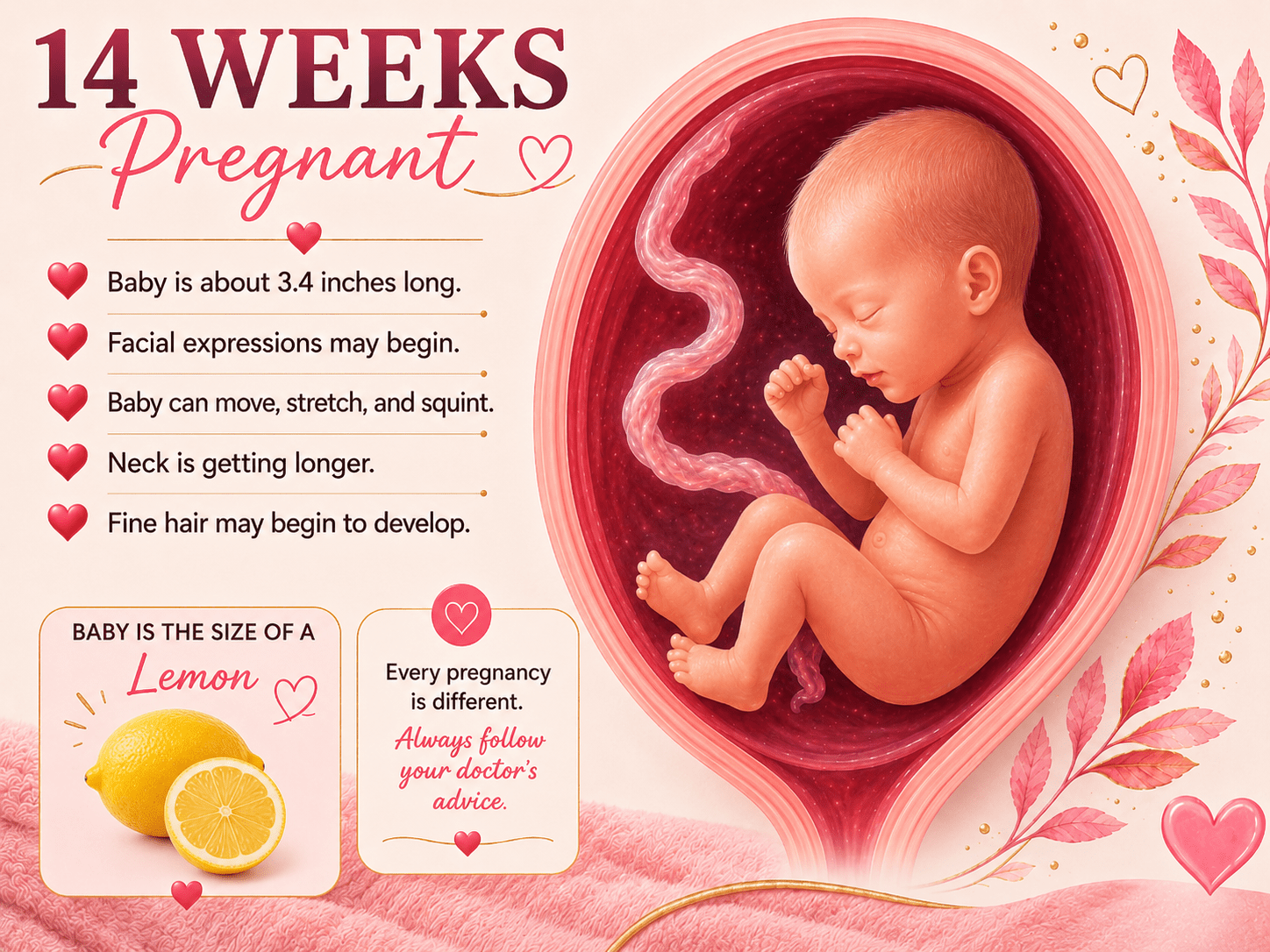
At 14 Weeks Pregnant, your baby is growing quickly and becoming more proportioned. The head is still large compared with the body, but it is getting rounder and starting to look more in proportion as the body catches up.
The NHS says that at 14 weeks, baby is around 8.5 cm long from head to bottom, about the size of a kiwi fruit. The head is getting rounder and more in proportion with the rest of the body. NHS
This week may feel different emotionally too. Some women feel relief after reaching the second trimester, while others still feel anxious, sick, tired, or uncomfortable. Both are normal experiences, and symptoms do not follow the exact same schedule for everyone.
How Big Is Baby at 14 Weeks Pregnant?
At 14 Weeks Pregnant, baby is about the size of a kiwi fruit according to the NHS and Tommy’s. Both describe baby as measuring around 8.5 cm from head to bottom. NHS Tommy’s
Some sources use different fruit comparisons, but kiwi is a reliable comparison from NHS and Tommy’s. The important thing is that baby is growing steadily and is much larger than in the early first trimester.
At 14 Weeks Pregnant, baby may be kicking and moving around, but most women still cannot feel movement yet. Movements are happening, but they are usually too small and gentle to notice this early.
Simple explanation: At 14 Weeks Pregnant, baby is about the size of a kiwi fruit. Baby is moving around, but it is usually still too early to feel those movements.
14 Weeks Pregnant Baby Development
At 14 Weeks Pregnant, baby development continues quickly. The NHS says baby is kicking around, the head is getting rounder, and baby is already making urine inside the womb. NHS
Tommy’s explains that baby has started swallowing tiny sips of amniotic fluid, which travels through the stomach and kidneys and comes back out as urine. This is a normal part of development and helps baby’s body systems keep practicing. Tommy’s
ACOG says that during weeks 13 to 16, bones are hardening, especially the long bones, the skin is thin and see-through but will start to thicken, and toenails form. ACOG
ACOG also notes that by week 14, the neck is defined, the lower limbs are developed, hearing begins to develop, lungs begin forming tissue that will allow oxygen and carbon dioxide exchange after birth, and limb movements become more coordinated. ACOG
14 Weeks Pregnant Symptoms
14 Weeks Pregnant symptoms can vary. Some women start feeling better in the second trimester, while others still have nausea, tiredness, mood swings, headaches, bloating, constipation, heartburn, or breast tenderness.
The NHS lists symptoms around 14 weeks that may include swollen and bleeding gums, pains on the side of the belly caused by the expanding womb, headaches, nosebleeds, bloating, constipation, indigestion, heartburn, sore breasts, dizziness, mood swings, white milky discharge, light spotting, and cramping. NHS
You may also notice your clothes getting tighter around the waist, even if you do not have a clear bump yet. Bloating, uterine growth, and body changes can all make your belly feel different.
- Nausea that may begin easing for some women.
- Fatigue, mood changes, or emotional sensitivity.
- Bloating, constipation, indigestion, or heartburn.
- Breast tenderness or breast growth.
- Headaches, dizziness, or nosebleeds.
- Swollen or bleeding gums.
- Side belly pains as the uterus expands.
- White milky discharge, mild cramping, or light spotting for some women.
Is Cramping Normal at 14 Weeks Pregnant?
Mild cramping at 14 Weeks Pregnant can happen. Your uterus is growing, ligaments are stretching, and digestion may still be slower because of pregnancy hormones.
Some women feel pulling, stretching, or pains on the side of the belly around this time. The NHS explains that side belly pains can happen as the womb expands. NHS
Call your doctor right away if cramping is severe, one-sided, comes with heavy bleeding, shoulder pain, dizziness, fainting, fever, or pain that feels very different from normal pregnancy discomfort.
Is Spotting Normal at 14 Weeks Pregnant?
Some women have light spotting at 14 Weeks Pregnant. Light spotting does not always mean something is wrong, but bleeding during pregnancy should still be mentioned to your healthcare provider.
If spotting becomes heavy, bright red, painful, or comes with dizziness, shoulder pain, or one-sided pelvic pain, call your doctor quickly. Your provider may recommend monitoring, bloodwork, an exam, or an ultrasound depending on your symptoms.
It is better to call and ask than to guess. Pregnancy bleeding can have different causes, and your healthcare team can help you decide what needs attention.
Can You See Baby on Ultrasound at 14 Weeks Pregnant?
At 14 Weeks Pregnant, ultrasound may show baby moving, stretching, or making small movements. Baby is much easier to see than in the earliest weeks, but exact details still depend on baby’s position, scan type, and timing.
The NHS says baby is kicking around at 14 weeks, but you probably will not feel it yet. A midwife may be able to hear the heartbeat using a handheld monitor placed on your tummy. NHS
If your ultrasound measurements do not match your expected dates exactly, your provider will explain what that means. Ovulation timing, cycle length, and early measurement differences can affect dating.
Can You Feel Baby Move at 14 Weeks Pregnant?
At 14 Weeks Pregnant, baby is moving, but most women still cannot feel it yet. Movement is usually too small and gentle to notice this early.
Some women, especially those who have been pregnant before, may think they feel early flutters sooner than others. But for many women, noticeable movement comes later in the second trimester.
Early baby movement is often described later as flutters, bubbles, taps, or little flicks. At 14 weeks, it is still normal if you feel nothing at all.
What Your Body May Be Doing at 14 Weeks Pregnant
At 14 Weeks Pregnant, your uterus is growing and your body is adjusting to second-trimester changes. Some women feel more energy, while others still feel tired and nauseated.
You may notice round ligament-type pulling, bloating, constipation, heartburn, breast changes, increased discharge, or gums that bleed more easily. These can be common, but anything severe, heavy, or unusual should be checked.
Your belly may start looking different, especially later in the day when bloating is stronger. Some women begin using softer waistbands or maternity leggings around this stage even before a clear bump appears.
What to Do at 14 Weeks Pregnant
If you are 14 Weeks Pregnant, this is a good time to stay consistent with prenatal care and make sure your next appointment is scheduled. You may also want to write down questions before visits so you do not forget them.
Keep taking a prenatal vitamin if your provider recommends it. Ask before starting, stopping, or changing medications, supplements, or herbal products.
You may also want to ask your provider about safe exercise, food safety, dental care, travel, work concerns, screening results, and which symptoms should be reported right away.
- Confirm your next prenatal appointment.
- Ask about screening results or upcoming testing if needed.
- Keep taking a prenatal vitamin if recommended.
- Ask your provider about medication and supplement safety.
- Drink fluids and eat small meals if nausea continues.
- Take care of your teeth and gums.
- Call your provider for heavy bleeding, severe pain, or dehydration.
What to Eat at 14 Weeks Pregnant
At 14 Weeks Pregnant, appetite may begin improving for some women. If nausea is easing, this can be a good time to focus on simple balanced meals with protein, fruits, vegetables, whole grains, and fluids.
If nausea is still present, keep meals small and manageable. Bland foods like crackers, toast, rice, potatoes, applesauce, bananas, noodles, cereal, yogurt, soup, or simple protein options may still be easier.
If heartburn or indigestion is bothering you, smaller meals, slower eating, and avoiding lying down right after eating may help. Call your provider if vomiting is severe or you cannot keep fluids down.
What Not to Worry About Too Much at 14 Weeks Pregnant
It is normal to feel emotional at 14 Weeks Pregnant. You may feel relieved to be in the second trimester but still anxious about symptoms, scans, baby movement, or whether everything is okay.
It is also normal if you do not have a big bump yet. Some women start showing earlier, while others still look the same. Bloating may come and go before a true bump becomes obvious.
Try not to compare your symptoms, bump size, scan timing, or energy level to someone else’s. Every pregnancy has its own pattern.
When to Call Your Doctor
Most mild symptoms at 14 Weeks Pregnant can be normal, but some symptoms should be checked quickly. Trust your instincts if something feels severe, unusual, or unsafe.
Call your doctor right away for heavy bleeding, severe cramping, one-sided pelvic pain, shoulder pain, dizziness, fainting, fever, or vomiting that keeps you from holding down fluids. This page is for general education and does not replace medical care.
14 Weeks Pregnant Summary
14 Weeks Pregnant is an active second-trimester week. Baby is about the size of a kiwi fruit according to the NHS, the head is becoming rounder, bones are hardening, the neck is more defined, and baby is swallowing amniotic fluid and making urine.
The most important things to know about 14 Weeks Pregnant are simple: symptoms may begin easing for some women, mild cramping or side pains can happen, baby movement is usually not felt yet, and prenatal care continues to guide what happens next.
If you are 14 Weeks Pregnant, keep taking care of your body, stay in contact with your healthcare provider, and call right away for heavy bleeding, severe pain, dehydration, or symptoms that worry you.